Sandwell Pharmacy Group
Pharmacy First & Minor Illness

Hayfever

Hayfever is one of the everyday conditions our pharmacists treat through our free NHS minor illness service — advice and treatment without a GP appointment.
Check eligibility & get treated →
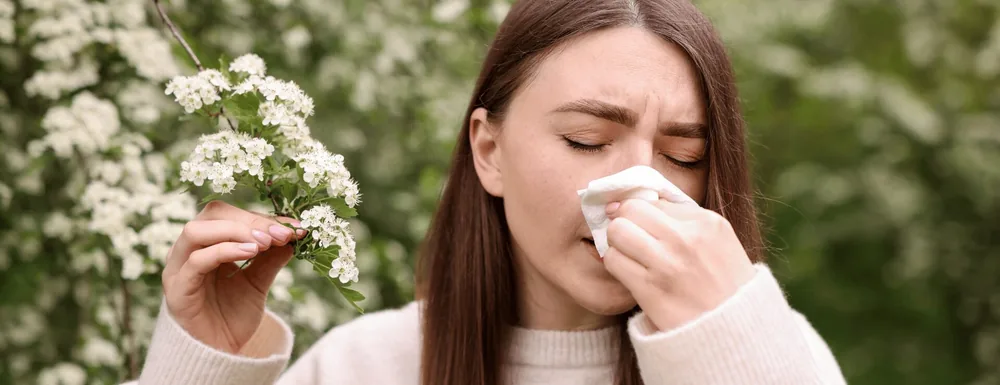
Woman sneezing into a tissue beside a tree in blossom

How we treat it

Speak to our pharmacist in the private consultation room. Where appropriate we can supply treatment free of charge under the local NHS minor ailments scheme, or recommend the best over-the-counter option.

Who's eligible?

Free NHS treatment is available if you are registered with a participating local GP and do not pay for prescriptions; everyone else can still get expert advice and low-cost treatment. Use our one-minute eligibility checker and our pharmacist will be in touch to arrange your consultation — or just walk in.

Get help today instead if you have:Call us on 0121 500 5756, your GP, or NHS 111. In an emergency call 999.
Start eligibility check →

Hayfever, explained

What it is, what to look out for, and what actually helps — from the pharmacists who treat it every day.

What is hayfever?

Hayfever is an allergic reaction to pollen — from grasses, trees or weeds — that inflames the lining of your nose, eyes and throat. In the UK it's at its worst from late March to September, peaking when the grass pollen count soars in June and July.

There's no cure, but the right combination of treatments controls it well for almost everyone. Our pharmacists can match you to the right antihistamine, steroid nasal spray and eye drops for your symptoms — and advise when a prescription-strength option or a different approach is worth trying.

You may have hayfever if you get:

  • 1
    Sneezing fits and a runny or blocked nose
  • 2
    Itchy, red, watering eyes
  • 3
    An itchy throat, mouth, nose or ears
  • 4
    Loss of smell, headache or pressure around the face
  • 5
    Tiredness — poor sleep during high pollen counts is common
What causes hayfever and when is it worst?
It's your immune system overreacting to pollen proteins. Tree pollen runs roughly March to May, grass pollen May to July (the most common trigger), and weed pollen June to September. Warm, dry, windy days send counts up; rain washes pollen out of the air.
Which hayfever treatment should I use?
For most people a once-daily non-drowsy antihistamine (cetirizine, loratadine or fexofenadine) is the starting point. If a blocked, runny nose dominates, a steroid nasal spray used daily is the most effective single treatment — but it takes days to build up, so start before your season hits. Itchy eyes respond best to antihistamine eye drops. Many people need a combination; ask us to tailor it.
How can I reduce my pollen exposure?
Check the forecast and plan around high counts. Keep windows closed in the early morning and evening when pollen peaks, shower and change clothes after being outside, and dry washing indoors on high-count days. A smear of barrier balm around the nostrils traps pollen, and wraparound sunglasses genuinely help.
My antihistamines aren't working — what next?
First check the basics: steroid nasal sprays need daily use and correct technique (aim away from the middle of your nose), and antihistamines work better taken before exposure. If a full combination still isn't controlling it, come and see us — switching antihistamine, adding eye drops, or a GP referral for further options may be the answer.
Is it hayfever or a cold?
Hayfever itches — eyes, throat, ears — and colds generally don't. Hayfever symptoms flare within minutes of exposure and persist for weeks in season, while a cold builds over a day or two and clears within about ten. No fever with hayfever, and the discharge stays clear and watery.

Read more on this

Written by our pharmacy team — practical detail on treatment, timing and when to get help.

Health HubHay Fever Treatment in West BromwichMatching the treatment to the symptom — and why tablets fail on a blocked nose.Read the guide →Health HubRed, Sticky Eye: Is It Conjunctivitis — and Do You Need Drops?Itchy streaming eyes in pollen season are usually allergic, not infective.Read the guide →
All health articles →
This may be free on the NHS

Hay Fever is covered by the NHS Minor Ailments Scheme. If you are exempt from prescription charges and registered with a Black Country GP, our pharmacist can supply the medicine free of charge — no GP appointment needed.

Check if you qualify →
0121 500 5756