Sandwell Pharmacy Group
Pharmacy First & Minor Illness

Eczema & Dry Skin

Eczema & Dry Skin is one of the everyday conditions our pharmacists treat through our free NHS minor illness service — advice and treatment without a GP appointment.
Check eligibility & get treated →
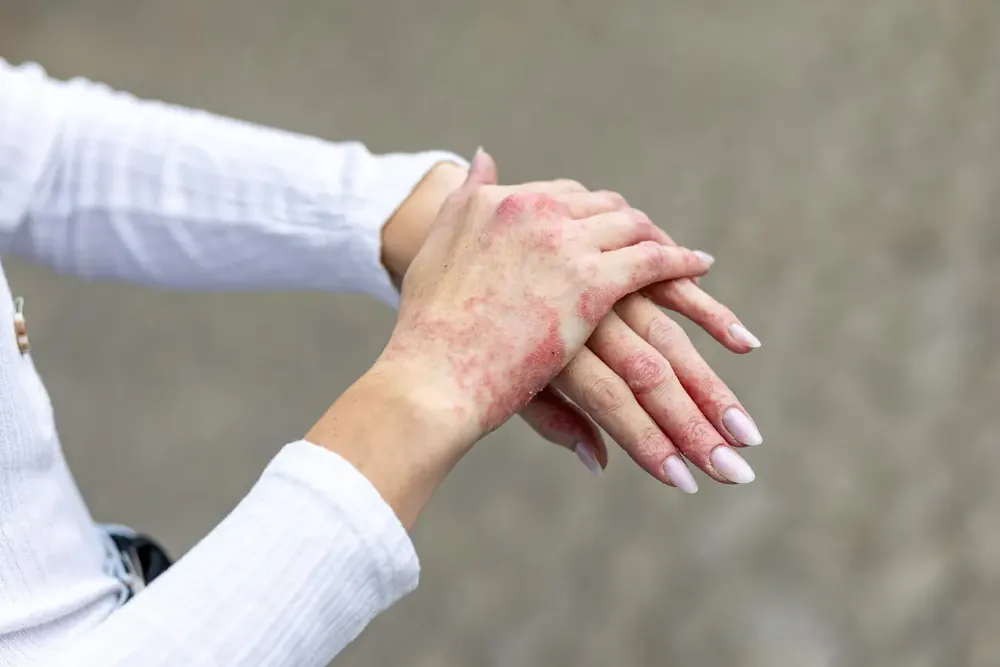
Hands with red, inflamed eczema patches across the backs and fingers

How we treat it

Speak to our pharmacist in the private consultation room. Where appropriate we can supply treatment free of charge under the local NHS minor ailments scheme, or recommend the best over-the-counter option.

Who's eligible?

Free NHS treatment is available if you are registered with a participating local GP and do not pay for prescriptions; everyone else can still get expert advice and low-cost treatment. Use our one-minute eligibility checker and our pharmacist will be in touch to arrange your consultation — or just walk in.

Get help today instead if you have:Call us on 0121 500 5756, your GP, or NHS 111. In an emergency call 999.
Start eligibility check →

Eczema & Dry Skin, explained

What it is, what to look out for, and what actually helps — from the pharmacists who treat it every day.

What is eczema?

Eczema (atopic dermatitis) is a condition that makes skin dry, itchy, red and cracked because the skin barrier doesn't hold moisture in or keep irritants out as it should. It's most common in children — often in the creases of elbows and knees — but affects plenty of adults too, and tends to flare and settle in cycles.

The foundation of managing eczema never changes: generous, frequent emollients to repair the barrier, and prompt treatment of flares before they take hold. Our pharmacists can help you find an emollient you'll actually use, advise on mild steroid creams for flares, and spot infected eczema that needs more.

You may have eczema if you have:

  • 1
    Dry, rough, flaky or scaly patches of skin
  • 2
    Itching — often intense, and worse at night
  • 3
    Redness and inflammation; on darker skin, patches may look grey, purple or darker brown
  • 4
    Cracked, weeping or bleeding skin in bad flares
  • 5
    Thickened, leathery skin in areas scratched over time
What causes eczema and what triggers flares?
Eczema runs in families alongside asthma and hayfever, and comes from a leaky skin barrier plus an over-reactive immune response. Common flare triggers: soaps and bubble baths, fragranced products, wool against skin, heat and sweating, cold dry weather, dust mites, pet dander, stress — and in some children, certain foods. Spotting your triggers is half the battle.
How should I use emollients properly?
Generously and constantly — not just when skin looks bad. Apply at least twice a day (more in winter), smoothed on in the direction of hair growth rather than rubbed in, and always within a few minutes of washing to lock moisture in. Use the emollient as a soap substitute too; ordinary soap strips the barrier you're trying to rebuild.
When should I use a steroid cream?
At the first sign of a flare — used promptly and correctly, a short course of mild steroid (like hydrocortisone 1%) settles inflammation before it escalates, and that's safer than weeks of under-treated, itchy, damaged skin. Apply a thin layer once or twice daily to the flared areas only, and keep emollients going alongside (leave a gap between the two). Ask us about use on faces and in children.
How do I know if eczema is infected?
Suspect infection when eczema suddenly worsens, weeps fluid, develops yellow-golden crusts, becomes hot and painful, or you feel feverish and unwell. Widespread painful blisters can signal eczema herpeticum, which is an emergency. Infected eczema needs assessment the same day — come in or call your GP.
Can eczema be cured?
There's no cure, but it can be controlled well — and many children grow out of the worst of it. The realistic goal is long stretches of calm skin with quick, confident treatment of flares. If flares are frequent or severe despite good emollient use and steroid courses, ask your GP about stronger treatments and referral; options have improved enormously.

Read more on this

Written by our pharmacy team — practical detail on treatment, timing and when to get help.

Health HubEczema: Getting Emollients and Steroid Creams RightHow much emollient to really use, and why fear of steroids makes eczema worse.Read the guide →
All health articles →
This may be free on the NHS

Dry Skin (Simple Eczema) is covered by the NHS Minor Ailments Scheme. If you are exempt from prescription charges and registered with a Black Country GP, our pharmacist can supply the medicine free of charge — no GP appointment needed.

Check if you qualify →
0121 500 5756