Gritty, tired, stinging eyes are one of the conditions our pharmacists treat through the free NHS minor ailments scheme — with the right drops for your pattern, not just the first box on the shelf.
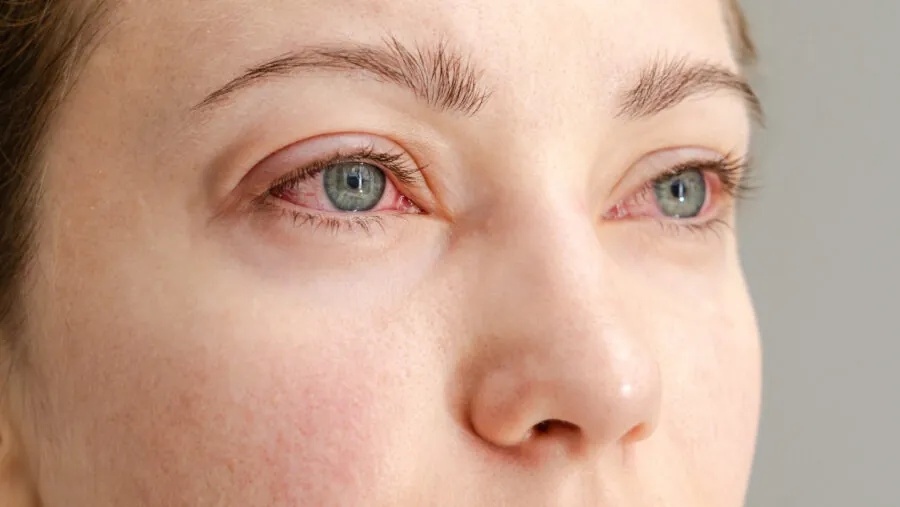
Our pharmacist will check what is behind the dryness — screens, air conditioning, contact lenses, blepharitis or a medicine side effect — and where appropriate supply lubricating drops or gel free of charge under the local NHS minor ailments scheme.
Free NHS treatment is available if you are registered with a participating local GP and do not pay for prescriptions; everyone else can still get expert advice and low-cost treatment. Use our one-minute eligibility checker and our pharmacist will be in touch to arrange your consultation — or just walk in.
What it is, what to look out for, and what actually helps — from the pharmacists who deal with it every day.
Dry eye happens when the tear film is not doing its job — either not enough tears, or tears that evaporate too quickly because the oily layer is poor. The result is a gritty, sandy, tired feeling, often worse at the end of the day. Confusingly, watery eyes are a classic dry eye symptom: the surface irritation triggers a reflex flood of watery tears that runs straight off.
Screens are the modern driver — we blink far less while concentrating — along with air conditioning, car heaters, contact lens wear and windy weather. Blepharitis, where the oil glands along the lid margin become blocked, is behind a great many stubborn cases, and it needs lid hygiene rather than more drops. Some medicines dry the eyes too, including certain antihistamines and antidepressants, which is worth checking.
Written by our pharmacy team — practical detail on treatment, timing and when to get help.
All health articles →We use essential cookies to make the site work — things like your basket, sign-in and secure checkout. With your permission we’d also like to use analytics cookies to understand how the site is used and improve it. See our cookie policy.