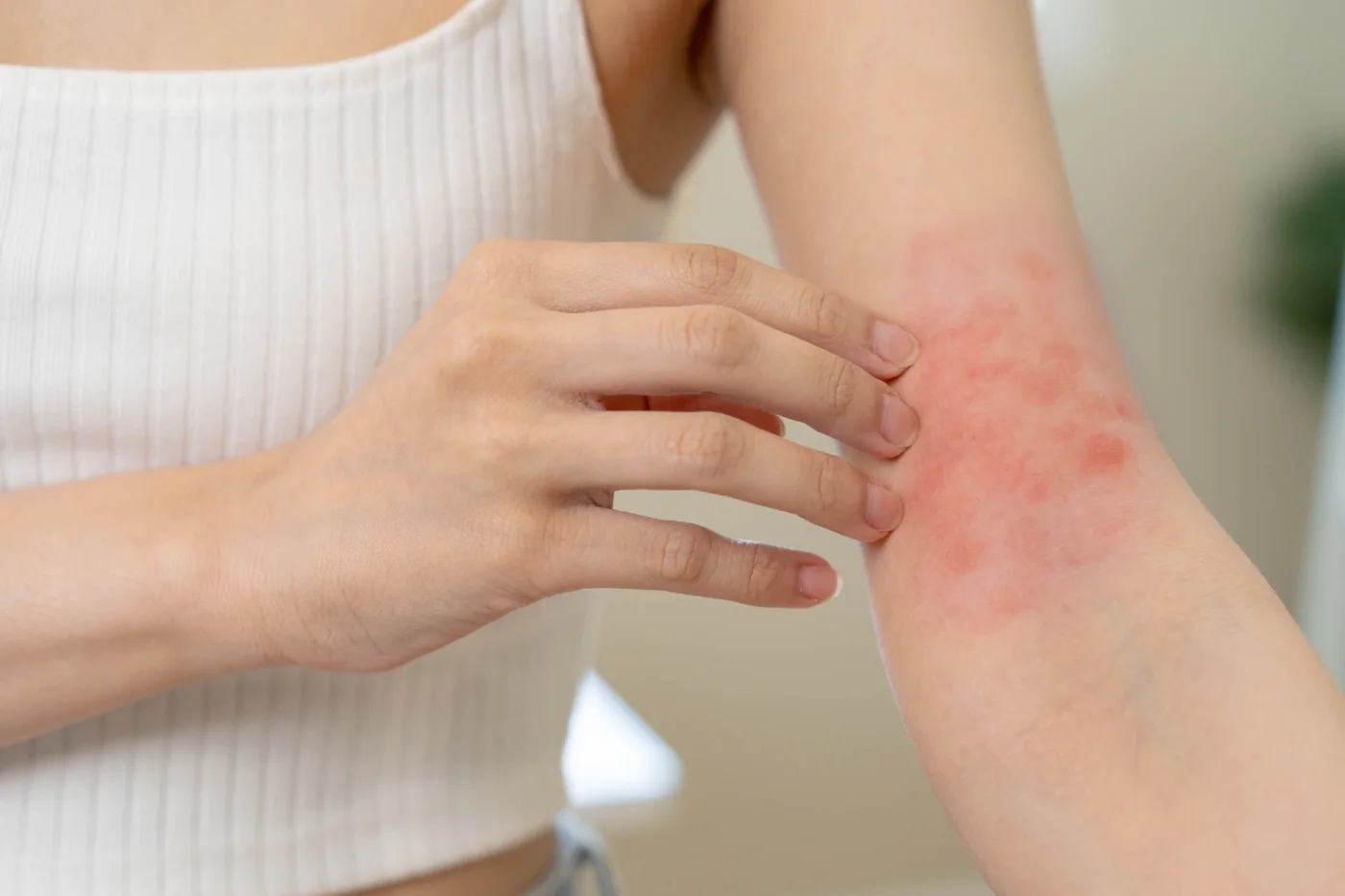
A normal bite is itchy, a little swollen and settles over a few days. An infected one changes after day two or three: the redness spreads outward, the area gets hot and painful rather than itchy, there may be pus, and you might feel unwell. Scratching is usually what lets bacteria in.
For a bite that is simply itchy: cold compress, antihistamine tablets, hydrocortisone cream, and don’t scratch. For one that is infected, antibiotics are the treatment. Children and adults from age 1 can get this free under NHS Pharmacy First for infected insect bites — see Pharmacy First. Adults can also use our private cellulitis and infected skin service, which additionally covers cellulitis of the lower leg and infected nail folds that the NHS pathway doesn’t; read our guide to spotting cellulitis early.
Draw round the edge of the redness with a pen when you first notice it. If it has grown past the line after 24–48 hours of antibiotics, or you develop a fever, feel shivery or see red streaks running up the limb, that is urgent — call 111 or go to A&E.
Bites near the eye, on the hand over a joint, in someone with diabetes or a weakened immune system, or after a tick bite with a spreading bullseye rash all need a doctor.
15-minute pharmacist consultation, supplied under a Patient Group Direction. Book a time at any of our six branches or walk in.
Book or find out more →We use essential cookies to make the site work — things like your basket, sign-in and secure checkout. With your permission we’d also like to use analytics cookies to understand how the site is used and improve it. See our cookie policy.